
Cybersecurity Explained
Hacker Typer Explained: Fun Simulator, Real Cybersecurity Lessons (2026 Guide)
What Hacker Typer actually is, how the simulator works, why it went viral, and what real hackers do instead — plus how Miami businesses can defend against the phishing, ransomware and cloud attacks driving 2026 breaches.
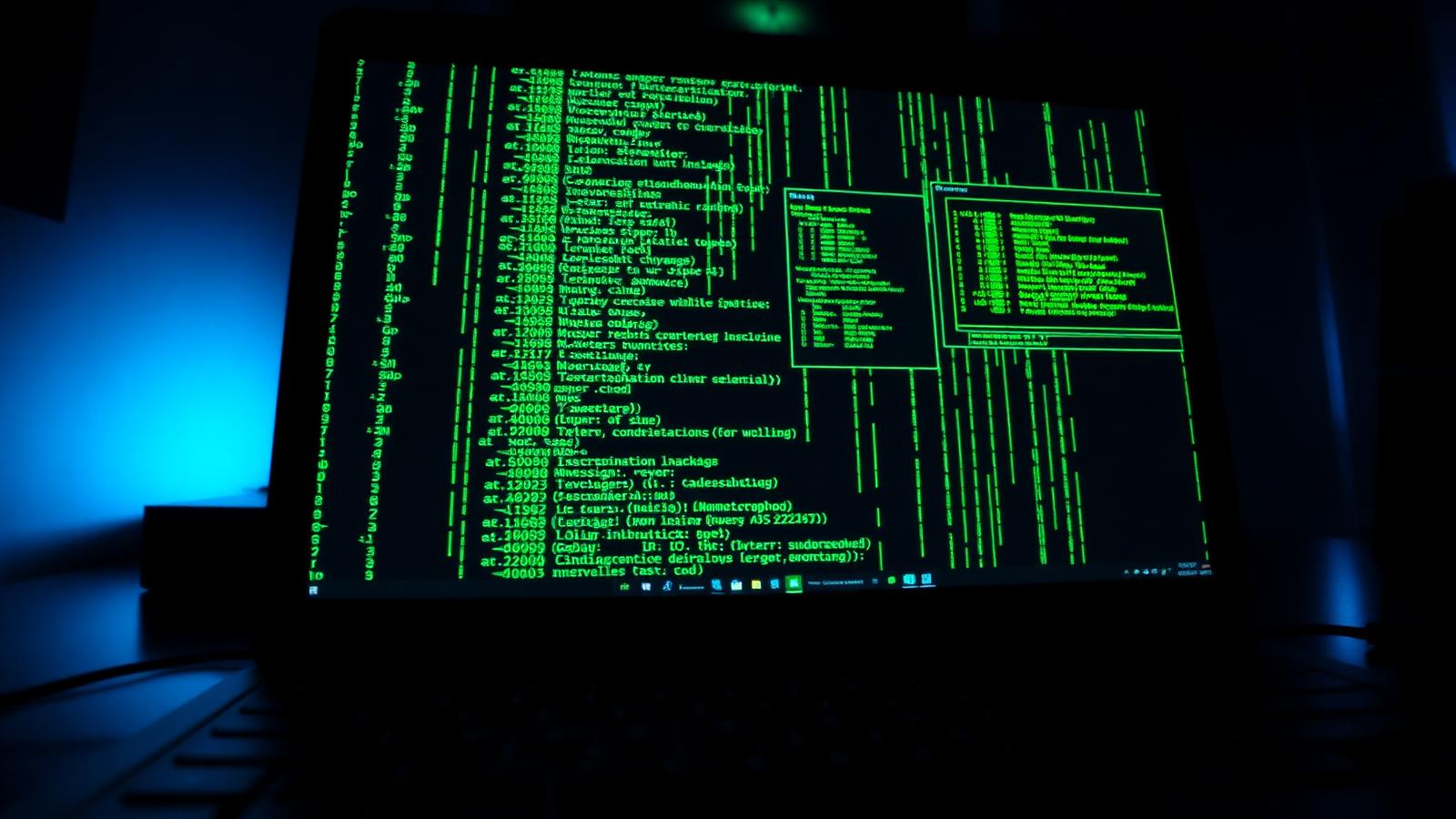
If you've ever watched a Hollywood hacking scene, you've seen someone furiously typing while lines of green code fly across the screen. That single visual inspired one of the internet's most popular novelty websites: Hacker Typer. Millions of people search for it every year because it's entertaining, easy to use, and makes anyone look like a cybersecurity expert in seconds.
But the important question is: does Hacker Typer actually hack anything? The answer is no. What makes it worth writing about is the gap between what Hacker Typer looks like and what real cybercriminals actually do to businesses in Miami and across the US every single day.
What Is Hacker Typer?
Hacker Typer is an online simulator that creates the illusion of advanced hacking. Instead of requiring any programming knowledge, the site simply displays realistic-looking computer code whenever you press random keys. You can mash your keyboard as fast as you want while the screen automatically scrolls through terminal commands, programming snippets, Linux output, network activity, system logs, error messages, fake password cracking and AI or encryption screens.
To anyone watching from a distance, it looks like you're performing an advanced cyberattack. In reality nothing is happening behind the scenes — no computers are being accessed, no passwords are being cracked, no networks are being scanned. It's simply an entertaining visual effect.
How Does Hacker Typer Work?
Unlike professional cybersecurity software, Hacker Typer doesn't execute commands. Every key press just triggers pre-written text — HTML, CSS, JavaScript, terminal output, random programming snippets and fake system logs. Some versions add FBI warning screens, Matrix-style animations, password-cracking simulations, AI interfaces, government-database themes or cryptocurrency mining visuals. Everything is pre-generated; nothing is actually being hacked.
Why Is Hacker Typer So Popular?
1. Movies made hacking look cool
Hollywood portrays hacking as rapid typing, green text, multiple monitors, passwords appearing instantly and dramatic countdown timers. Real cybersecurity rarely looks like this, but people enjoy recreating those scenes.
2. It's great for pranks
Walking into an office and seeing someone rapidly typing while dozens of command windows appear grabs attention. It's a five-second party trick.
3. Content creators love it
YouTubers, TikTok creators, Instagram influencers, gamers and streamers use Hacker Typer as a background effect for cybersecurity-themed videos and thumbnails.
4. It sparks interest in cybersecurity
Many cybersecurity professionals — including some on our team — admit they first got curious about hacking after seeing simulations like this. Although it's fake, it introduces people to Linux, command lines, programming, networking and ethical hacking. For a lot of us, it was a gateway into real cybersecurity education.
Can Hacker Typer Actually Hack Anything?
No. Hacker Typer cannot hack Wi-Fi, access Facebook, break into email accounts, crack passwords, access bank accounts, hack Instagram, infect computers, scan networks or install malware. It has zero hacking capabilities — it's simply an animation with a keyboard listener.
What Real Hackers Actually Do
Real cybercriminals don't randomly smash keyboards — they carefully plan attacks. The techniques we see driving 2026 breaches are almost all quiet, patient and boring to watch:
- Phishing — sending fake emails that trick employees into revealing passwords or clicking malicious links.
- Credential theft — reusing usernames and passwords stolen in previous data breaches.
- Malware — installing malicious software that steals information or grants remote access.
- Ransomware — encrypting company files and demanding payment to restore them.
- Social engineering — manipulating people over phone, email or SMS instead of attacking computers.
- Vulnerability exploitation — taking advantage of outdated, unpatched software.
- Business email compromise — impersonating executives or vendors to redirect wire transfers.
- Cloud attacks — targeting Microsoft 365, Google Workspace, AWS, Azure, Dropbox and other cloud platforms.
Hollywood Hacking vs Real Hacking
Hollywood shows fast typing, green text, passwords appearing instantly, dramatic music and a 60-second countdown to breach. Reality looks nothing like that — it's research, patience, automation, programming, reconnaissance and vulnerability analysis, usually stretched across weeks or months of planning. Cybersecurity professionals genuinely spend more time reading documentation and log files than typing commands.
Why Businesses Should Take Cybersecurity Seriously
Every business is a target. Small businesses often believe "we're too small to get hacked" — which is exactly what attackers hope. Small organizations frequently combine weak passwords, no MFA, outdated software, untrained employees, poor backups and misconfigured cloud systems. Those weaknesses make automated, opportunistic attacks cheap and profitable.
Common Cybersecurity Threats in 2026
The threat landscape has evolved fast over the last 18 months. The threats Cybrvault's incident-response team is called about most often in 2026 include:
- AI phishing — generative AI writes near-perfect phishing emails at scale, with no grammar tells to spot.
- Deepfake voice scams — criminals clone executives' voices from public podcast or webinar audio.
- Business email fraud — attackers impersonate vendors and change wiring instructions on invoices.
- Supply chain attacks — hackers compromise a software vendor first, then ride the trusted update to hundreds of customers.
- Zero-day exploits — previously unknown vulnerabilities weaponized before patches exist.
- Credential stuffing — automated login attempts using passwords from previous breaches.
- Cloud misconfigurations — one incorrect S3, SharePoint or Google Drive setting can expose thousands of files.
Warning Signs Your Business May Be Compromised
One symptom alone rarely means much. Two or three clustered in the same week is when we open a case:
- Computers slow down without explanation.
- Unknown software appears on endpoints.
- Employees are randomly locked out of accounts.
- Strange login alerts arrive from unfamiliar countries.
- Password reset emails you didn't request.
- Unexpected MFA prompts pushed to your phone.
- Files go missing or are renamed to strange extensions.
- Unauthorized bank transfers or vendor payment changes.
- Suspicious emails sent from your own accounts.
- Antivirus or EDR alerts you can't explain.
How Businesses Can Reduce Risk (Fast, Low-Cost Wins)
Use multi-factor authentication everywhere
MFA blocks the vast majority of account takeover attempts, including almost all credential-stuffing attacks. Prefer app-based or hardware-key MFA over SMS.
Keep software updated
Patch operating systems, browsers, servers, and business applications on a defined cadence — not "when we get to it." Most 2026 ransomware entries exploit vulnerabilities patched more than 90 days earlier.
Train employees
People remain the biggest single risk. Teach staff to recognize phishing, fake invoices, scam phone calls and malicious links. Simulated phishing programs work — the click-rate reliably drops from ~30% to under 5% within a few quarters.
Use strong, unique passwords
Every account should have a unique password stored in a password manager, protected by MFA. Password reuse is what turns one breach into ten.
Perform regular security assessments
Vulnerability scans and penetration tests find weaknesses before criminals do. Annual is a floor; quarterly is better for regulated industries.
Monitor your systems
Continuous monitoring (EDR, SIEM, cloud audit logs) helps detect attacks early — the median 2026 dwell time is still over two weeks for unmonitored networks.
Back up data — including offline copies
Immutable, offline or air-gapped backups are what let organizations recover from ransomware without paying. Cloud sync alone is not a backup.
Ethical Hackers vs Criminal Hackers
Ethical hackers work with permission — their goal is to improve security. They find vulnerabilities, test defenses, produce reports and recommend fixes. Criminal hackers pursue money, data, ransom, identity theft or espionage. The technical skills overlap heavily; the authorization and intent are completely different.
Cybersecurity Is More Than Technology
Modern security combines people, processes, technology, policies, training, monitoring, incident response and compliance. One missing piece creates the opportunity attackers need — which is why buying more tools rarely fixes a broken program on its own.
Why Professional Security Testing Matters
Many companies believe antivirus is enough. Antivirus alone cannot stop phishing, social engineering, cloud attacks, weak passwords, misconfigured firewalls, exposed databases or unpatched web applications. Professional assessments uncover those risks before criminals exploit them — and give you a prioritized fix list you can actually execute.
Cybersecurity Services from Cybrvault
At Cybrvault Cybersecurity, we help Miami and South Florida businesses proactively identify and reduce cyber risk before it leads to downtime or data loss. Our services include:
- Penetration testing
- Vulnerability assessments
- Web application security testing
- Internal network security reviews
- External attack surface analysis
- Cloud security assessments (Microsoft 365, Google Workspace, AWS, Azure)
- Employee security awareness guidance
- Security reporting with prioritized recommendations
- Ongoing security consulting and vCISO
Whether you're a small business, law firm, healthcare provider, financial company or growing organization, we provide practical security assessments designed to strengthen your defenses against today's evolving threats. Serving clients across Miami-Dade and remotely across the US.
Final Thoughts
Hacker Typer is a fun way to imitate movie-style hacking, but it has nothing in common with how real cyberattacks are carried out. Today's attackers rely on phishing, stolen credentials, cloud vulnerabilities, ransomware and social engineering — not dramatic keyboard mashing. Organizations that invest in proactive cybersecurity, employee awareness and regular security testing are far better positioned to defend against these real-world threats.
If you're ready to strengthen your organization's security posture, Cybrvault Cybersecurity can help identify vulnerabilities before attackers do. Call +1-305-988-9012 for a free 30-minute triage call.
Get the 10-step Cyber Hardening Checklist
The exact steps our Miami team uses to lock down people and small businesses — takes under an hour. Instant access, no call required.
// frequently asked
Questions teams ask us
Is Hacker Typer real hacking?+
No. Hacker Typer is a visual simulation that displays pre-written code and terminal output as you press keys. It performs no real hacking activity — no networks, accounts or devices are touched.
Can Hacker Typer hack Wi-Fi?+
No. It cannot access wireless networks or perform any security testing. It's a keyboard-driven animation running in your browser.
Is Hacker Typer safe to use?+
Generally, yes. It's intended for entertainment and does not interact with other systems. Only use the well-known versions and avoid clones asking you to install browser extensions or download files.
Can Hacker Typer steal passwords?+
No. It cannot collect credentials or compromise accounts. If a Hacker Typer clone ever asks you to log in with real credentials, close the tab immediately — that's a phishing lure using the brand.
Why do cybersecurity professionals use Linux terminals?+
Linux offers powerful tools for system administration, automation, scripting and authorized security testing. Real work is grounded in planning and analysis — not random typing.
Should businesses rely only on antivirus software?+
No. A layered strategy that includes employee training, patch management, multi-factor authentication, offline backups, monitoring and regular security assessments provides much stronger protection than any single tool.
Does Cybrvault serve businesses outside Miami?+
Yes. Cybrvault is headquartered in Miami and serves clients across Miami-Dade and Broward in person, and the rest of the US remotely for assessments, incident response and vCISO engagements.
// miami, fl services
Cybersecurity built for South Florida
// need help applying this?
Book a free, confidential consultation.
Our engineers can map this to your environment in 30 minutes.
Get secured// keep reading
Related articles
Cybersecurity Culture
Hacker Typer: Fake Hacking Simulator & Cheat Codes
Learn how Hacker Typer works, trigger Access Granted or Access Denied, and use full screen. Compare fake hacking simulators with real ethical hacking.
Cybersecurity Explained
Google Dorking Explained: A Beginner's Guide to Google Hacking (2026)
What Google dorking is, how hackers and OSINT investigators use Google search operators to find exposed files, cameras and credentials — plus how Miami businesses can find and fix their own dorkable data before attackers do.
Personal Cybersecurity
How to Prevent Identity Theft in 2026: A Miami Resident's Complete Guide
Florida leads the country in identity theft reports year after year — and Miami is the epicenter. This 2026 field guide from a Miami cybersecurity firm walks through the exact freezes, alerts, tools, and daily habits that actually stop identity theft (and what to do in the first 24 hours if it already happened to you).
Under attack right now? Our 24/7 line responds immediately.