Cybersecurity Culture
Hacker Typer: Fake Hacking Simulator & Cheat Codes
Learn how Hacker Typer works, trigger Access Granted or Access Denied, and use full screen. Compare fake hacking simulators with real ethical hacking.

Hacker Typer is a fake hacking simulator: pressing keys displays pre-written code, not a real attack. To try the original, open https://hackertyper.net in your browser and start typing. You do not need hacking skills to create the movie-style terminal effect.
Looking for the cheat codes? In the original simulator, press Alt three times for Access Granted or Caps Lock three times for Access Denied. The shortcut guide below covers dismissing overlays and using full screen; controls can differ between versions and devices. This article explains the simulator, alternatives, prank precautions, and how real authorized ethical hacking differs.
What Is Hacker Typer?
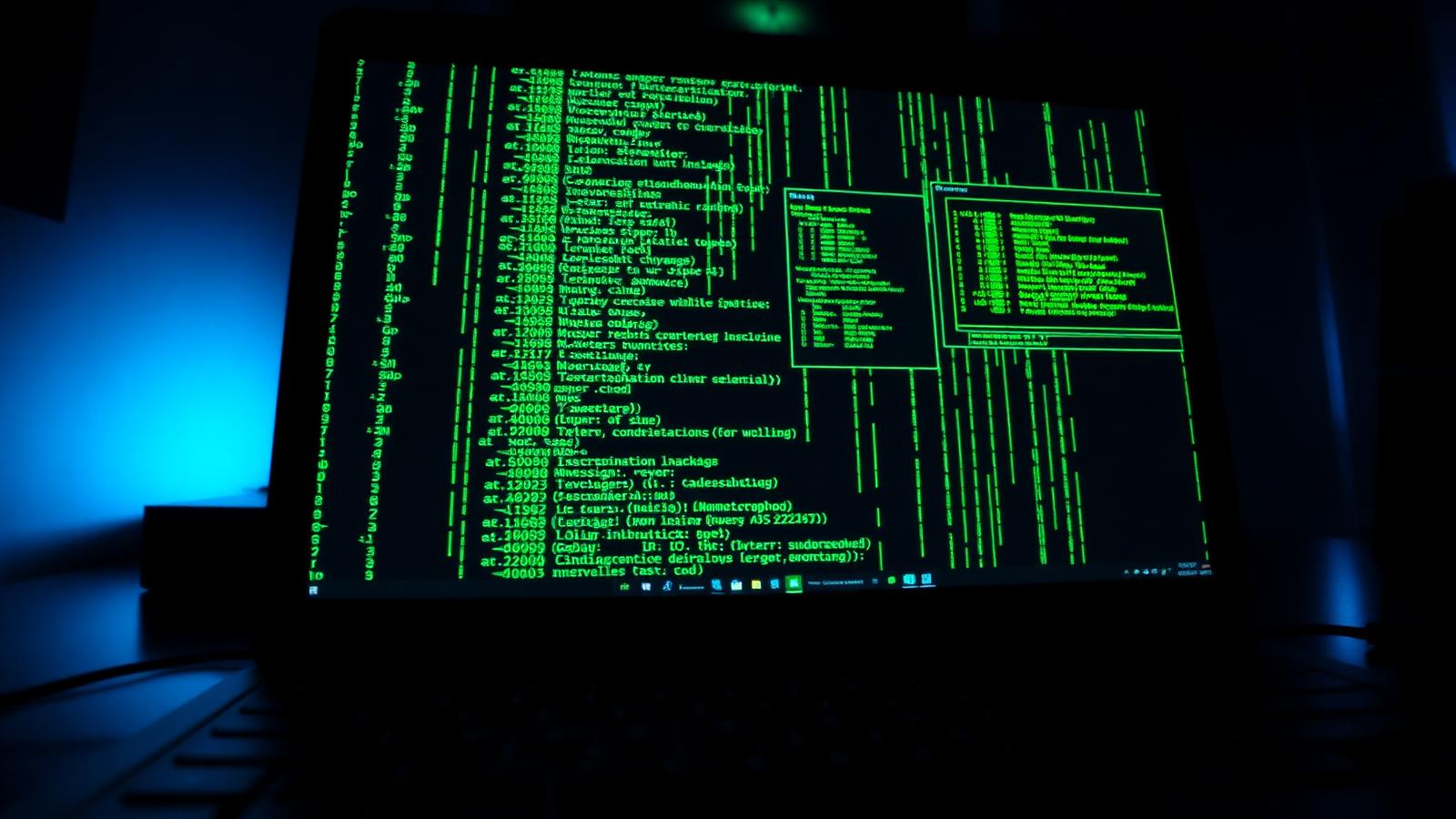
Hacker Typer is a web-based novelty tool that simulates the visual experience of hacking. You open the site, start typing any keys at random, and the screen fills with realistic-looking source code, terminal output, and command-line text. Most versions are styled after the classic Hollywood hacker aesthetic: black background, monospace font, glowing green characters, and just enough scrolling chaos to convince a casual observer that something genuinely intense is happening.
The most famous version is hackertyper.net, originally created in 2011 by Duiker101 as a joke. It became an overnight viral hit and has since inspired dozens of clones and remixes including Geek Typer, Pranx, and a long tail of mobile apps.
Is There a "Real" Hacker Typer?
This is the single most searched question about the tool, so let's answer it directly: there is no version of Hacker Typer that performs real hacking. Every site using the name — including the original hackertyper.net — is a visual simulator. Nothing is scanned, nothing is breached, and no data leaves your browser. If a site, app, or extension claims to be "the real Hacker Typer" that actually hacks accounts, Wi-Fi, or games, it is malware, adware, or a scam, without exception.
People searching for "real hacker typer" usually mean one of three things. Here is what each one actually gets you:
- "The original, not a clone" — that is hackertyper.net, created in 2011 by Duiker101. Everything else is a remix.
- "A version that looks convincingly real" — GeekTyper and Pranx add themed dashboards, fake progress bars, and multi-window layouts that photograph far better than plain green text.
- "A tool that really hacks" — that does not exist as a novelty website. Real offensive security uses licensed tools (Nmap, Burp Suite, Metasploit) and is only legal with written authorization from the system owner.
So the honest answer is that the real Hacker Typer is a fake hacker typer — that is the entire point of it. What is real is the field it parodies, which we cover in detail further down.
Hacker Typer Cheat Codes, Shortcuts and Full-Screen Tricks
Most of the "secret" Hacker Typer commands people hunt for are just a handful of keyboard triggers built into the original site. These are the ones that still work in 2026:
- Press Alt three times → the green "ACCESS GRANTED" overlay appears.
- Press Caps Lock three times → the red "ACCESS DENIED" overlay appears.
- Press Esc (or click anywhere) → dismisses the overlay and returns to the code stream.
- Press F11 → true full screen in Chrome, Edge, Firefox and Brave; this is what sells the effect on a projector or stream.
- Hold any key down → the code auto-scrolls faster, which reads better on camera than realistic typing speed.
- Zoom out with Ctrl and minus (Cmd and minus on Mac) → smaller font, denser code, more "terminal wall" per screenshot.
For video work, combine full screen, a zoomed-out font, and a slow steady key press rather than frantic mashing. Real terminals scroll in bursts with pauses, so a slightly slower cadence looks more believable than speed.
How to Pull Off a Convincing Hacker Typer Prank (Step by Step)
Most people land here wanting one thing: a screen that looks convincingly like hacking in the next thirty seconds. Here is the setup that works best on a laptop, a projector, or a phone.
- 1Open hackertyper.net in a fresh tab and press F11 for true full screen — no tabs, no bookmarks bar, no clock.
- 2Zoom out twice (Ctrl and minus, Cmd and minus on Mac) so the code wall fills the screen with dense small text.
- 3Dim the room and turn screen brightness up; the green-on-black glow is what sells it on camera.
- 4Type at a steady, unhurried pace for ten to fifteen seconds before triggering anything.
- 5Press Alt three times for the ACCESS GRANTED overlay as the punchline, then Esc to dismiss it.
- 6On a phone, use the browser's desktop-site option and landscape orientation, or use a Hacker Typer web page rather than an installed app.
Two details separate a good prank from an obvious one: never mash keys at cartoon speed, and never leave the browser chrome visible. Everything else is lighting.
Hacker Typer for Teachers and Content Creators
The simulator is genuinely useful as a teaching prop. In a classroom, the strongest lesson is the contrast: show the green-text wall, then show a real vulnerability scan report and ask students which one finds actual problems. It reframes hacking from theatrics into methodology in about five minutes.
- Streamers and editors: run it on a second monitor as background B-roll and keep the cadence slow so it loops believably.
- Teachers: pair it with a live demo of a password strength checker or a phishing email breakdown — see our phishing email examples guide.
- Parents: use it as an opening to talk about what real attacks look like — usually a text message, not a terminal. Our how to avoid being hacked guide is a good follow-up.
What a Real Hacker's Screen Actually Looks Like
Our analysts spend most of their day in a terminal, and it looks almost nothing like the simulator. Side by side, the differences are obvious once you know them:
- Color: real terminals are mostly white, grey, and yellow text with occasional red errors — not uniform neon green.
- Pace: long silences. An Nmap sweep or a Burp Suite crawl can run for twenty minutes while the operator reads documentation.
- Windows: a real session is usually tmux panes, a browser with proxy history, a notes file, and a ticketing tab — not one full-screen wall of code.
- Output: structured scanner results, HTTP requests and responses, and JSON — not scrolling source code.
- Endgame: a written report with reproduction steps and risk ratings. There is no "ACCESS GRANTED" banner anywhere in real life.
How Does Hacker Typer Actually Work?
The technical answer is delightfully boring. Hacker Typer is not running any exploits, scanning any networks, or talking to any servers. It is a few hundred lines of JavaScript that does exactly one thing: every keypress appends the next chunk of a hard-coded code sample to the screen.
- The page ships with a long pre-written block of real-looking source code (often Linux kernel snippets or open-source C/Python files).
- A keydown event listener fires on every key you press.
- Each press writes the next few characters from that hidden block into the visible output area.
- Visual effects — blinking cursor, green-on-black palette, occasional fake "ACCESS GRANTED" pop-ups — sell the illusion.
That is it. No connection to the internet, no access to your files, no contact with any target system. It is the keyboard equivalent of a player piano.
Why Did Hacker Typer Go Viral?
Hacker Typer hit at the perfect cultural moment. Movies like The Matrix, Mr. Robot, Swordfish, and Hackers had already trained audiences to associate cybersecurity with cascading green text. When a free tool appeared that let anyone reproduce that exact look in their browser, it spread instantly through schools, offices, and early YouTube.
In the TikTok era it found a second life. Creators use it for skits, classroom pranks, and reaction-bait videos with captions like "POV: my little brother thinks I'm hacking the school". Search interest for terms like hacker typer, fake hacker screen, and hacker simulator now spikes every back-to-school season.
Is Hacker Typer Safe to Use?
Yes. The legitimate Hacker Typer sites — hackertyper.net, geektyper.com, and pranx.com/hacker — are pure front-end JavaScript. They do not install anything, they do not request elevated permissions, and they do not communicate with any external system on your behalf. Closing the tab fully ends the experience.
That said, the popularity of the term has attracted copycats. A handful of clones bury the tool inside aggressive ad networks, push notification spam, or fake "download our hacker app" buttons that lead to adware. Two simple rules keep you safe:
- Stick to the well-known domains (hackertyper.net, geektyper.com, pranx.com).
- Never install a desktop or mobile app that claims to be "the real Hacker Typer" — there is no such thing.
The Best Hacker Typer Sites and Alternatives in 2026
1. HackerTyper.net
The original. Clean interface, instant load, classic green-on-black look. Press Alt three times for a fake "ACCESS GRANTED" overlay or Caps Lock for "ACCESS DENIED".
2. GeekTyper.com
More elaborate — themed dashboards that mimic NASA, the FBI, the Pentagon, Matrix, and various sci-fi UIs. Great for screenshots and YouTube backdrops.
3. Pranx Hacker Typer
A polished modern remake at pranx.com/hacker with multiple windows, fake password crackers, and downloadable "viruses" (all visual, all harmless).
4. Hacker Typer Neo
A community remix styled after The Matrix with falling katakana characters and an audio loop. Pure aesthetic value.
5. Mobile imitators
Several Android and iOS apps replicate the experience. Most are fine, but check reviews and permissions — a fake-hacking app has no reason to request your contacts, location, or microphone.
Real Hacking vs Fake Hacking: What's Actually Different?
Hacker Typer is comedy. Real ethical hacking is methodical, mostly quiet, and looks nothing like a movie. Here is what genuinely happens during a professional penetration test at a firm like Cybrvault Cybersecurity:
- Reconnaissance — OSINT, subdomain enumeration, and public asset discovery using tools like Amass, Shodan, and crt.sh.
- Scanning — Nmap, Nessus, and Burp Suite map out the attack surface and identify likely entry points.
- Exploitation — Metasploit, custom scripts, and manual web-app testing validate whether a vulnerability is actually reachable.
- Post-exploitation — privilege escalation, lateral movement, and persistence are simulated to measure real business impact.
- Reporting — the deliverable is a written report with reproduction steps, risk ratings, and remediation guidance, not a green-text screen.
Most of the work is reading, note-taking, and writing. The terminal is involved, but it is calm, color-coded, and full of long pauses while scans run. There is no rapid keyboard mashing, and no "I'm in" moment.
Fun Ways People Use Hacker Typer
- Pranks on friends, siblings, and coworkers ("don't touch my keyboard, I'm hacking the Pentagon").
- Classroom demos where teachers introduce cybersecurity concepts by contrasting fake hacking with real defensive practices.
- B-roll and background footage for YouTube videos, TikToks, Twitch streams, and Instagram Reels.
- Halloween and cosplay setups — pair it with a hoodie, a Guy Fawkes mask, and a webcam light for instant Mr. Robot energy.
- Office pranks on April Fool's Day when paired with a fake "system compromised" desktop wallpaper.
- Stage and theater productions that need a believable hacker scene without hiring a graphics team.
When Fake Hacking Stops Being a Joke
The tool itself is harmless, but pairing it with the wrong context can cross legal lines. A few things to keep in mind:
- Do not use Hacker Typer to threaten or extort anyone. Sending screenshots with messages like "I'm in your system" can qualify as criminal threats or wire fraud depending on your state.
- Do not run it on company-owned equipment without permission. IT teams often investigate "hacking-style" screens, which can trigger incident response, suspensions, or termination.
- Schools take it seriously. A student pretending to hack a school network may face suspension even if no real attack occurred.
- Public deployments (digital signage, library kiosks) can be mistaken for real compromises and trigger emergency calls.
When in doubt: it is funny among friends who know the joke, and risky among people who do not.
From Fake Hacking to Real Cybersecurity
If Hacker Typer made cybersecurity look fun, the next step is realizing how interesting the real field actually is. Modern ethical hackers help banks, hospitals, law firms, and small businesses stay ahead of ransomware crews, phishing operators, and nation-state actors. The pay is strong, the work is varied, and the demand keeps growing — the U.S. Bureau of Labor Statistics projects cybersecurity roles will grow more than 30% through 2032.
Good entry points include TryHackMe, Hack The Box, the PortSwigger Web Security Academy, and free OSINT challenges. Pair those with a home lab built on a mini PC running Proxmox, Kali, and a vulnerable Active Directory environment, and you have the same setup our junior analysts at Cybrvault train on.
How Cybrvault Helps Real Businesses Stay Secure
Cybrvault Cybersecurity is a Miami-based ethical hacking and cybersecurity consulting firm serving clients across Coral Gables, South Florida, and the entire United States. While Hacker Typer is great for laughs, the threats we defend against are not: ransomware, business email compromise, OSINT-driven impersonation, web application exploits, insider threats, and supply-chain attacks.
Our services include penetration testing, vulnerability scanning, website security assessments, OSINT investigations, incident response, and ongoing managed cybersecurity. Every engagement starts with a free, confidential discovery call so we can scope the right work for your environment.
- Ethical hacking and penetration testing — the real version of what the simulator imitates.
- Business cybersecurity — managed protection for Miami and South Florida companies.
- Personal security — for executives, families, and high-profile individuals.
- OSINT investigations — finding what the internet already knows about you.
- 24/7 monitoring — detection and response while you sleep.
- Talk to us — free, confidential discovery call.
Learn more at https://cybrvault.com — and the next time someone shows you a green-text screen, you'll know exactly what is (and isn't) happening behind it.
Final Thoughts
Hacker Typer is a joke, a meme, a teaching tool, and a piece of internet history all at once. It has introduced more people to the idea of hacking than almost any other website on the planet, even if what it shows has nothing to do with how real cybersecurity works. Use it for fun, use it to spark curiosity, and if it ever makes you wonder what real hacking looks like — that curiosity is exactly how most ethical hackers got started.
Get the 10-step Cyber Hardening Checklist
The exact steps our Miami team uses to lock down people and small businesses — takes under an hour. Instant access, no call required.
// frequently asked
Questions teams ask us
Is there a real Hacker Typer that actually hacks?+
No. Every Hacker Typer site, including the original hackertyper.net, is a visual simulator that only prints pre-written text to the screen. Nothing is scanned, breached, or transmitted. Any site, app, or extension claiming to be a 'real' Hacker Typer that hacks accounts, Wi-Fi, or games is malware or a scam — real offensive security requires licensed tools and written authorization from the system owner.
What are the Hacker Typer cheat codes?+
On hackertyper.net, pressing Alt three times shows the green ACCESS GRANTED overlay, pressing Caps Lock three times shows the red ACCESS DENIED overlay, and Esc or a click dismisses either one. F11 goes full screen, and zooming out with Ctrl and minus makes the code wall denser for screenshots and video.
What is Hacker Typer?+
Hacker Typer is a free browser-based novelty tool that fills the screen with realistic-looking code as you mash the keyboard, making it look like you are hacking. It is purely visual — no real hacking, scanning, or network activity occurs. The original lives at hackertyper.net.
Is Hacker Typer safe to use?+
Yes. The well-known Hacker Typer sites (hackertyper.net, geektyper.com, pranx.com/hacker) are pure front-end JavaScript and cannot harm your device, install anything, or contact other systems. Avoid copycat sites with aggressive ads and never install a desktop or mobile app claiming to be the real Hacker Typer.
How does Hacker Typer work?+
Every key you press triggers a JavaScript event that appends the next chunk of a hidden pre-written code sample to the screen. The illusion comes from a black background, green monospace font, and occasional fake pop-ups like ACCESS GRANTED — there is no connection to any target system.
Is using Hacker Typer illegal?+
No. The tool itself is legal everywhere. However, using it alongside threats, extortion attempts, or claims that you have actually compromised a system can become criminal — including charges for wire fraud, criminal threats, or violations of the Computer Fraud and Abuse Act depending on context and jurisdiction.
What are the best Hacker Typer alternatives in 2026?+
The most popular are GeekTyper.com (themed FBI, NASA, and Matrix dashboards), Pranx Hacker Typer (multi-window experience with fake password crackers), and Hacker Typer Neo (Matrix-style remix). All are browser-based and free.
Does Hacker Typer actually hack anything?+
No. Hacker Typer cannot scan networks, breach accounts, or interact with external systems. It only writes pre-loaded text to the screen as you type. Real hacking requires specialized tools like Nmap, Burp Suite, and Metasploit operated by trained professionals — and is only legal with explicit authorization.
What does real ethical hacking look like compared to Hacker Typer?+
Real ethical hacking is slow, methodical, and mostly involves reading documentation, running scans, taking notes, and writing reports. There is no rapid keyboard mashing and no green-text overlay. Firms like Cybrvault Cybersecurity follow a structured methodology — reconnaissance, scanning, exploitation, post-exploitation, and reporting — to help businesses find and fix vulnerabilities legally.
How can I get started in real cybersecurity?+
Begin with free platforms like TryHackMe, Hack The Box, PortSwigger Web Security Academy, and OverTheWire. Build a home lab using a mini PC running Proxmox, Kali Linux, and a vulnerable Active Directory environment. Pair hands-on practice with foundational certifications like CompTIA Security+ or eJPT to break into the industry.
// miami, fl services
Cybersecurity built for South Florida
// need help applying this?
Book a free, confidential consultation.
Our engineers can map this to your environment in 30 minutes.
Get secured// keep reading
Related articles
Cybersecurity Explained
Hacker Typer Explained: Fun Simulator, Real Cybersecurity Lessons (2026 Guide)
What Hacker Typer actually is, how the simulator works, why it went viral, and what real hackers do instead — plus how Miami businesses can defend against the phishing, ransomware and cloud attacks driving 2026 breaches.

Personal Cybersecurity
How to Prevent Identity Theft in 2026: A Miami Resident's Complete Guide
Florida leads the country in identity theft reports year after year — and Miami is the epicenter. This 2026 field guide from a Miami cybersecurity firm walks through the exact freezes, alerts, tools, and daily habits that actually stop identity theft (and what to do in the first 24 hours if it already happened to you).

Cybersecurity Explained
Google Dorking Explained: A Beginner's Guide to Google Hacking (2026)
What Google dorking is, how hackers and OSINT investigators use Google search operators to find exposed files, cameras and credentials — plus how Miami businesses can find and fix their own dorkable data before attackers do.
Under attack right now? Our 24/7 line responds immediately.