Compliance & Audits
Cybersecurity Audit in Miami: The 2026 Guide for Business Owners (Costs, Scope & Checklist)
A cybersecurity audit is the single fastest way for a Miami business to find out where it's exposed — before an attacker, regulator, or cyber insurer does. Here's what a real 2026 audit covers, what it costs in South Florida, how it maps to FIPA, HIPAA, PCI-DSS 4.0, and SOC 2, and the exact checklist Cybrvault uses on Miami engagements.
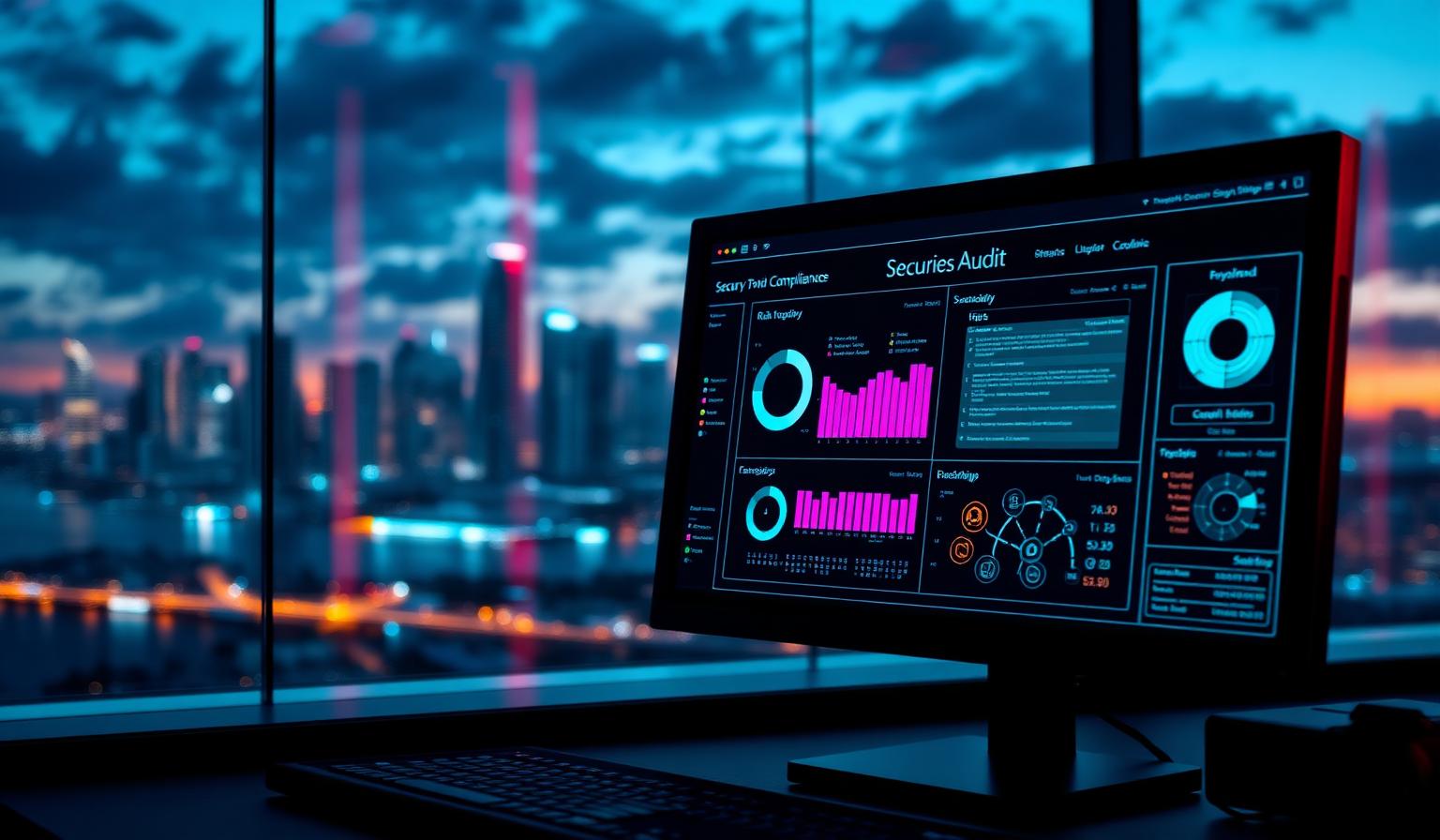
If you run a business in Miami — a medical practice in Coral Gables, a law firm in Brickell, a logistics company in Doral, a fintech in Wynwood — you are already a cybersecurity target. Florida ranks in the top 3 U.S. states for reported cybercrime losses year after year, and Miami-Dade is the epicenter. A cybersecurity audit is the fastest, cheapest way to find out exactly where you're exposed before an attacker, a regulator, or your cyber insurer does it for you.
This guide covers what a real audit includes in 2026, what it costs in South Florida, how it maps to the frameworks Miami businesses actually get held to (FIPA, HIPAA, PCI-DSS 4.0, SOC 2, CMMC), and the checklist Cybrvault uses on live engagements. If you'd rather skip to a quote, book a free scoping call.
What Is a Cybersecurity Audit? (And What It's Not)
A cybersecurity audit is a formal, evidence-based review of an organization's security controls against a defined standard — NIST CSF 2.0, CIS Controls v8.1, ISO 27001, HIPAA Security Rule, PCI-DSS 4.0, SOC 2, or a client-mandated framework. The deliverable is a written report: what was tested, how it was tested, what was found, what the risk is, and what to fix in what order.
It is not the same as:
- A vulnerability scan. Automated tools like Nessus or Qualys enumerate known CVEs. That's input to an audit, not the audit.
- A penetration test. A pentest actively exploits weaknesses to prove impact. An audit reviews whether controls exist and work. Most mature Miami businesses need both — see our penetration testing guide.
- A free 'cyber assessment' from an MSP sales rep. Those are almost always a scan wrapped in a proposal. Real audits are done by independent assessors against a named framework.
Why Miami Businesses Need an Audit in 2026
Four things changed in the last 24 months that make a documented audit non-optional for most South Florida businesses:
- 1FIPA enforcement is real. Florida's Information Protection Act (Fla. Stat. §501.171) requires 'reasonable measures' to protect personal information and mandates notification within 30 days of a breach. The Attorney General has issued six-figure settlements against Florida businesses that couldn't demonstrate a documented security program.
- 2Cyber insurance underwriting tightened. Carriers like Chubb, Travelers, and Coalition now require MFA everywhere, EDR on every endpoint, tested backups, and a recent security assessment before they'll bind or renew. No audit, no policy — or premiums 2–4× higher.
- 3Client and vendor questionnaires exploded. If you sell to hospitals, banks, cruise lines, universities, or federal agencies (all major Miami buyers), you're getting a 200-question security questionnaire. An audit report answers 80% of it in one PDF.
- 4AI-driven attacks lowered the bar. Deepfake voice scams, LLM-written phishing, and automated exploitation now hit small businesses the same way they hit enterprises. See our guide on AI voice scams.
What a Real 2026 Cybersecurity Audit Covers
Cybrvault audits are scoped against NIST CSF 2.0 by default (with mapping to CIS v8.1, HIPAA, PCI, SOC 2, or CMMC as needed). A full engagement covers all six NIST functions:
1. Govern
- Written information security policy (WISP) and acceptable use policy
- Roles, responsibilities, and executive accountability
- Third-party / vendor risk management program
- Cyber insurance coverage review
2. Identify
- Asset inventory: endpoints, servers, SaaS, cloud accounts, mobile devices, IoT
- Data inventory and classification (PII, PHI, PCI, trade secrets)
- Network topology and data flow diagrams
- Risk register with likelihood × impact scoring
3. Protect
- Identity: MFA coverage, conditional access, privileged access management
- Endpoints: EDR/MDR deployment, patch cadence, disk encryption, USB controls
- Network: firewall rules, segmentation, wireless security (see our Miami home WiFi guide for principles that also apply to SMB)
- Email: SPF, DKIM, DMARC (enforce), anti-phishing, sandboxing
- Data: backup 3-2-1-1-0, immutable copies, tested restore
- Security awareness training + phishing simulations
4. Detect
- Log sources: identity, endpoint, network, cloud, SaaS
- SIEM / XDR coverage and alert tuning
- 24/7 monitoring (in-house SOC vs. MDR partner — see Miami 24/7 monitoring)
- Threat intel and detection engineering maturity
5. Respond
- Written incident response plan with named roles
- Tabletop exercises within the last 12 months
- Legal, PR, and law-enforcement contacts (FBI Miami Field Office, Florida AG)
- FIPA / HIPAA / PCI breach notification playbooks
6. Recover
- Business continuity and disaster recovery plans
- RTO / RPO defined per system and actually tested
- Hurricane-season resilience (Miami-specific): power, ISP redundancy, off-region backups
- Lessons-learned process after every incident
Cybersecurity Audit Cost in Miami (2026 Pricing)
Real 2026 pricing from South Florida providers, based on scope and headcount. These are engagement fees, not annual retainers.
- Micro-business audit (1–15 employees, single office): $4,500 – $8,500. NIST CSF 2.0 lite, one framework, remote assessment, executive report + remediation roadmap.
- SMB audit (15–75 employees): $8,500 – $18,000. Full NIST CSF 2.0 or CIS v8.1, on-site + remote, interviews with 5–10 stakeholders, technical validation, mapped findings.
- Mid-market / regulated audit (75–300 employees, HIPAA/PCI/SOC 2 scope): $18,000 – $45,000. Multi-framework, evidence collection, control testing, gap analysis with remediation plan.
- SOC 2 Type II readiness (pre-audit): $20,000 – $45,000, plus $25,000 – $65,000 for the actual CPA firm audit.
- HIPAA Security Rule risk analysis: $6,000 – $15,000 (required annually by OCR for covered entities and business associates).
- PCI-DSS 4.0 audit (SAQ or ROC): SAQ guidance $5,000 – $12,000; full ROC by a QSA $35,000 – $150,000+.
- CMMC Level 2 readiness (DoD contractors): $18,000 – $55,000 for gap assessment; certification audit priced separately by a C3PAO.
Red flag: any Miami firm quoting a flat $999 'cybersecurity audit' — that's a vulnerability scan and a sales pitch, not an audit. Real assessor time (senior consultant at $200–$350/hr) makes anything under ~$4,500 economically impossible.
The Cybrvault Miami Audit Checklist (What We Actually Test)
Use this as a self-assessment before you call anyone. If you can't answer 'yes, with evidence' to most of these, you have audit findings waiting to happen.
Identity & Access
- MFA enforced on 100% of user accounts, including admins, service accounts, and VPN
- Phishing-resistant MFA (passkeys, FIDO2, or hardware keys) for privileged users — see passkeys vs passwords
- Unique admin accounts separate from daily-driver accounts
- Quarterly access reviews with documented sign-off
- Offboarding SLA under 4 hours for terminated employees
Endpoints
- EDR (CrowdStrike, SentinelOne, Huntress, Defender for Business) on 100% of endpoints and servers
- Full-disk encryption on every laptop (BitLocker, FileVault)
- Patch SLA: critical within 7 days, high within 30
- Local admin rights removed from standard users
- Mobile device management (MDM) on any device touching company email
Email & Phishing
- SPF, DKIM, DMARC at p=reject on every sending domain
- External sender warning banner enabled
- Anti-phishing / impersonation protection (Microsoft Defender, Google, Abnormal, IRONSCALES)
- Quarterly phishing simulations with tracked click rates
- Documented process for reporting phishing (button in Outlook/Gmail)
Backups & Recovery
- 3-2-1-1-0 backups: 3 copies, 2 media, 1 offsite, 1 immutable, 0 errors on last restore test
- Backups tested by restore — not just 'green in the console'
- Off-region copy (out of Florida) for hurricane-season resilience
- Documented RTO/RPO per critical system
Network & Cloud
- Guest WiFi segmented from corporate
- Firewall rules reviewed in the last 12 months
- Cloud posture management (CSPM) on AWS/Azure/GCP tenants
- SaaS-to-SaaS OAuth permissions inventoried (Google Workspace, Microsoft 365)
Governance & Response
- Written InfoSec policy, acceptable use, incident response plan
- Tabletop exercise in the last 12 months with executives present
- FIPA/HIPAA/PCI notification workflow documented and pre-approved by counsel
- Cyber insurance policy on file with control requirements met
How an Audit Maps to Miami Compliance Frameworks
- FIPA (Florida): 'Reasonable measures' + 30-day breach notice. A NIST CSF 2.0 audit is the strongest evidence a Florida business can produce.
- HIPAA (medical, dental, mental health, billing): Annual Security Risk Analysis is required. An audit satisfies §164.308(a)(1)(ii)(A).
- PCI-DSS 4.0 (any card acceptance): SAQ or ROC depending on volume; annual assessment required.
- SOC 2 (SaaS, fintech, service providers): Type I or Type II depending on client demands. Audit-readiness saves 3–6 months.
- CMMC (DoD contractors — Miami has ~1,200): Level 1 self-assessed, Level 2 requires a C3PAO. See CMMC Level 1 requirements.
- GLBA / NYDFS / SEC (financial services): Similar control expectations; NIST CSF mapping accepted by most examiners.
Audit Timeline: What to Expect
- 1Week 0 — Scoping call (free): framework selection, systems in scope, stakeholders, price and SOW.
- 2Week 1 — Kickoff & evidence request: policies, org chart, network diagram, asset inventory, tool exports.
- 3Weeks 1–3 — Interviews & control testing: 30–60 minute sessions with IT, HR, finance, ops; technical validation (config reviews, log samples, backup restore).
- 4Week 3 — Draft report review: findings, risk ratings, recommendations. You get to challenge and clarify.
- 5Week 4 — Final report + roadmap: executive summary (for the board), detailed findings (for IT), prioritized 30/60/90 remediation plan.
- 6Optional — Remediation & re-test: Cybrvault can fix the findings or hand off to your MSP. We re-test in 90 days.
10 Questions to Ask Before Hiring a Miami Cybersecurity Auditor
- 1What framework are you assessing against, and can I see a sample redacted report?
- 2Who are the named assessors, and what are their certifications (CISA, CISSP, CISM, OSCP, HITRUST CCSFP, PCI QSA)?
- 3Are you independent of any product you're going to recommend?
- 4How do you handle evidence — is it kept in a client portal or emailed around?
- 5What's your process for HIPAA / PCI / SOC 2 mapping if I need it later?
- 6Do you carry professional liability and cyber insurance? What limits?
- 7Will you sign a mutual NDA and, if applicable, a Business Associate Agreement (BAA)?
- 8How is the report structured — executive summary, technical findings, remediation roadmap?
- 9Do you re-test after remediation, and is that included?
- 10Can you provide 3 Miami / South Florida client references in my industry?
Common Findings on Miami SMB Audits (2026)
After hundreds of South Florida engagements, the same handful of gaps show up on almost every first audit:
- MFA missing on service accounts, break-glass accounts, or legacy VPN
- Local admin rights everywhere ('it was easier that way')
- Backups running but never restore-tested — and no immutable copy
- DMARC at p=none (monitoring only) instead of p=reject
- No written incident response plan, or one that names people who left in 2022
- Cyber insurance application answered 'yes' to controls that aren't actually deployed (this voids coverage)
- Shadow SaaS: 40–120 unsanctioned apps holding company data
How Cybrvault Runs Miami Cybersecurity Audits
We are a Miami-headquartered cybersecurity firm. Every audit is delivered by senior assessors — no offshoring, no interns. Our audits map to NIST CSF 2.0 by default and cross-walk to CIS v8.1, HIPAA, PCI-DSS 4.0, SOC 2, and CMMC. We publish a redacted sample report on request, sign mutual NDAs and BAAs, and re-test remediated findings within 90 days at no extra charge.
Related services: Miami cybersecurity · Miami ethical hacking / pentest · 24/7 SOC monitoring · OSINT investigations.
Book a Cybersecurity Audit in Miami
If you're a Miami-Dade, Broward, or Palm Beach business owner and you can't confidently answer 'yes' to most of the checklist above, you have findings waiting to happen. A scoping call is free and takes 30 minutes. Contact Cybrvault to schedule.
Get the 10-step Cyber Hardening Checklist
The exact steps our Miami team uses to lock down people and small businesses — takes under an hour. Instant access, no call required.
// frequently asked
Questions teams ask us
How long does a Miami cybersecurity audit take?+
A micro-business audit (1–15 employees) takes 2–3 weeks end to end. An SMB audit (15–75 employees) runs 3–5 weeks. A full multi-framework audit (HIPAA + SOC 2, or PCI + NIST) typically takes 6–10 weeks including evidence collection, interviews, control testing, draft review, and the final remediation roadmap.
What's the difference between a cybersecurity audit and a risk assessment?+
A risk assessment identifies and rates threats to your business (what could go wrong, how bad, how likely). An audit tests whether specific controls exist and work against a named framework. Most mature Miami engagements combine both — the risk assessment sets priorities, and the audit measures where you actually stand. HIPAA specifically requires a documented Security Risk Analysis annually.
Do I really need an audit if I already have an MSP?+
Yes — and independence is the point. Your MSP built and maintains your environment, so having them audit their own work is a conflict of interest that cyber insurers, regulators, and enterprise buyers all flag. An independent audit gives you (and them) an unbiased view of what's actually working, and gives your MSP a prioritized punch list instead of guesswork.
Will an audit cause downtime for my Miami business?+
No. Audits are non-invasive by design — assessors review configurations, interview staff, and validate controls through evidence, not active exploitation. Any technical validation that could affect production (log pulls, backup restore tests) is scheduled with your team. If you want active exploitation, that's a penetration test, which is a separate engagement.
How often should a Miami business get a cybersecurity audit?+
Annually at minimum, and after any major change: acquisition, cloud migration, new regulatory obligation, major incident, or leadership change in IT/security. HIPAA, PCI, and SOC 2 all require annual assessments. Cyber insurers increasingly ask for a report dated within the last 12 months at renewal. Between annual audits, quarterly control checks and continuous vulnerability management keep the report honest.
What does Cybrvault's Miami cybersecurity audit include?+
A written scope, senior-led interviews with your team, technical validation of controls, mapped findings against NIST CSF 2.0 (plus HIPAA/PCI/SOC 2/CMMC as needed), an executive summary for leadership, a detailed technical report for IT, a prioritized 30/60/90 remediation roadmap, and a free re-test of remediated findings within 90 days. Pricing starts at $4,500 for micro-businesses and scales with headcount and framework scope.
// miami, fl services
Cybersecurity built for South Florida
// need help applying this?
Book a free, confidential consultation.
Our engineers can map this to your environment in 30 minutes.
Get secured// keep reading
Related articles
Personal Security
Best Cybersecurity Practices for Individuals: 2026 Guide
Follow a practical, prioritized personal cybersecurity checklist for safer accounts, devices, home Wi-Fi, finances, travel, family communications, and recovery.

Home Security
Home Cyber Security Services in Miami: 2026 Guide
Learn what professional home cyber security services protect, what a Miami residential assessment includes, and how to choose qualified help for your household.
Personal Security
Personal Cyber Security Services in Miami: 2026 Guide
A practical guide to personal cyber security services in Miami for individuals, families, executives, and professionals—including device, account, privacy, home network, and incident protection.
Under attack right now? Our 24/7 line responds immediately.