
Local Cybersecurity
Cybersecurity in Fort Lauderdale 2026: The Complete Guide for Broward County Businesses
The definitive 2026 guide to cybersecurity in Fort Lauderdale — the threats hitting Broward County businesses, which services you actually need, what fair pricing looks like, and how to vet a local cybersecurity company before you sign a contract.
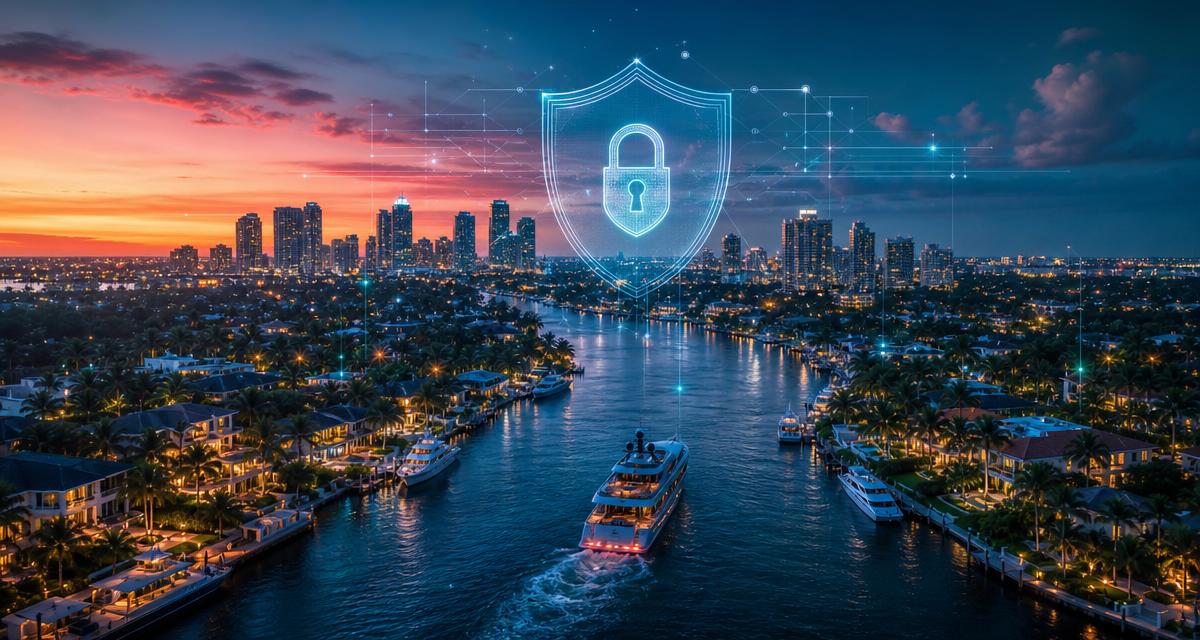
If you run a business in Fort Lauderdale — a law firm on Las Olas, a yacht brokerage on the Intracoastal, a medical group in Plantation, a logistics company near Port Everglades, or a hospitality operator in Downtown or on the beach — cybersecurity is no longer a back-office IT concern. It's a board-level, revenue-preserving discipline. This guide walks through what "cybersecurity in Fort Lauderdale" actually looks like in 2026: the real threat landscape in Broward County, the services that matter, honest pricing, and how to hire a local firm without getting sold marketing.
It's written by the incident responders, penetration testers, and engineers at Cybrvault Cybersecurity, a South Florida firm that handles breaches, audits, and 24/7 monitoring for Fort Lauderdale and Broward County businesses every day.
Why Fort Lauderdale Businesses Are a High-Value Target
Broward County sits inside one of the most attacked business corridors in the United States. Between Fort Lauderdale, Miami, and West Palm Beach, South Florida generates a disproportionate share of the FBI IC3's reported cybercrime losses — driven by real estate, marine, cross-border trade, healthcare, professional services, and high-net-worth wealth management. Attackers know the money is here, and they follow it.
In practical terms, the average Fort Lauderdale business is more likely to see:
- Business email compromise (BEC) and wire fraud on real estate closings, yacht sales, and vendor payments
- Ransomware targeting law firms, medical practices, marinas, and property management companies
- Cloud account takeovers on Microsoft 365 and Google Workspace via phishing and MFA fatigue
- AI voice-clone ("vishing") calls impersonating CFOs, title agents, and yacht brokers
- Spanish- and Portuguese-language phishing aimed at LATAM-facing staff
- Hospitality- and OT-specific attacks on hotels, restaurants, and marina infrastructure
- Insider threats from short-tenure hospitality, marine, and construction staff
Layer in Florida's 30-day breach-notification deadline under Fla. Stat. § 501.171 and the cost of getting caught unprepared in Broward County is materially higher than in most US metros.
Fort Lauderdale vs Miami vs Boca Raton: How the Threat Profile Differs
The core threats are the same across South Florida, but the industries — and therefore the attack patterns — shift by city.
- Fort Lauderdale — heavy on marine/yachting, hospitality, law firms, healthcare, cruise-adjacent logistics, and mid-market real estate. Wire fraud on high-ticket transactions is the #1 loss vector.
- Miami — international banking, real estate, LATAM trade, family offices. Higher rate of BEC and cross-border fraud. See our Miami cybersecurity services guide.
- Boca Raton / Palm Beach — wealth management, medical, tech, senior demographics. Elder-fraud and family-office targeting are elevated.
Regardless of which city your HQ sits in, if you operate anywhere in the tri-county area you should assume you're inside the same threat blast radius.
The 8 Cybersecurity Services Fort Lauderdale Businesses Actually Use
Below is what's actually being deployed in Broward County in 2026, in rough order of adoption.
1. Managed Detection & Response (MDR / 24×7 SOC)
MDR is the foundation. A US-based security operations center monitors endpoints, identity, email, and cloud around the clock, triages alerts, and actively contains threats — isolating a laptop, killing a session, disabling an account — often within minutes. For most Fort Lauderdale SMBs this is the highest-ROI single line item and the platform everything else sits on. See our 24/7 monitoring page for how Cybrvault delivers this across South Florida.
2. Endpoint Detection & Response (EDR)
The agent that runs on laptops, desktops, and servers. Modern EDR (SentinelOne, CrowdStrike, Microsoft Defender for Business) replaces legacy antivirus and provides the telemetry MDR needs. If a Fort Lauderdale provider is still selling you "business antivirus" in 2026, treat that as a red flag.
3. Email Security & Anti-Phishing
More than 90% of the intrusions Cybrvault responds to in Broward County start with email. A proper 2026 stack layers API-based email security (Abnormal, Avanan, or equivalent) on top of Microsoft 365 or Google Workspace, enforces DMARC (p=reject), monitors brand impersonation, and runs continuous phishing simulation and training.
4. Identity & Access (MFA, SSO, Conditional Access)
The most common root cause of Fort Lauderdale cloud breaches: a user without phishing-resistant MFA. Every business — no exceptions — should be on hardware-key or passkey MFA, SSO where possible, and conditional access policies that block risky sign-ins by geography and device posture.
5. Backup & Disaster Recovery
Ransomware groups now delete backups before encrypting. Immutable, off-site backups (Veeam with object lock, Datto, Rubrik) with tested restore procedures are non-negotiable. "We have OneDrive" is not a backup strategy — see our ransomware protection guide.
6. Penetration Testing & Vulnerability Management
An annual external + internal penetration test validates that your controls actually work. Continuous vulnerability scanning between pen tests catches drift. Any Fort Lauderdale business subject to PCI, HIPAA, SOC 2, or cyber-insurance requirements should treat both as table stakes.
7. Governance, Risk & Compliance (vCISO)
A fractional / virtual CISO gives you executive-level security leadership at a fraction of a full-time hire — policy, risk assessments, vendor reviews, board reporting, and mapping to frameworks like NIST CSF 2.0, CIS v8, CMMC 2.0, and HIPAA.
8. Incident Response (Retainer or Emergency)
When something bad happens — ransomware, wire fraud, a rogue insider, a compromised M365 tenant — you need a firm that can be on-site in Fort Lauderdale within hours, not days. Cybrvault runs an emergency IR line at +1-305-988-9012 and covers Broward County directly from our South Florida operations.
What Cybersecurity Costs in Fort Lauderdale in 2026
Pricing varies with headcount, regulatory exposure, and data sensitivity, but the ranges below are representative of proposals Broward County businesses receive in 2026. Use them as a sanity check on any quote.
- Managed cybersecurity (MDR + EDR + email + identity) for a 20–100 person business: $1,200 – $7,500/month
- External + internal penetration test (annual): $6,000 – $25,000
- vCISO engagement: $2,500 – $10,000/month depending on hours
- Cybersecurity risk assessment (one-time): $5,000 – $20,000
- Emergency incident response: $350 – $600/hour, with a typical ransomware engagement running $15,000 – $150,000+
- Security awareness training + phishing simulation: $3 – $8 per user/month
- Compliance readiness (HIPAA / SOC 2 / CMMC / PCI): $15,000 – $75,000 in year one
Anyone quoting "complete cybersecurity" for $99/month is selling antivirus with a new logo. Anyone quoting six figures a year for a 15-person Fort Lauderdale firm is over-selling. Get 2–3 proposals, compare line items rather than totals, and insist on written scope.
How to Choose a Fort Lauderdale Cybersecurity Company
The Broward market is crowded with IT shops that added "cybersecurity" to their website in the last 24 months. Here's how to separate real security firms from re-branded MSPs before you sign.
- 1Ask who actually staffs the SOC. Is it a US-based 24/7 team, or a ticket queue answered the next business day?
- 2Ask for sample deliverables — a redacted pen test report, a sample vCISO board deck, a sample incident report. Real firms have them.
- 3Ask about certifications the *people* hold, not just the company: OSCP, GCIH, GCFA, CISSP, CCSP.
- 4Ask about incident response experience in your industry (marine, hospitality, healthcare, legal, real estate) — with references.
- 5Ask how they'd handle a ransomware call at 2am on a Sunday. If the answer isn't a clear runbook and a named on-call, keep looking.
- 6Verify cyber-insurance and E&O coverage on the provider itself — you want them insured for the work.
- 7Confirm data residency and who has admin access to your tenants. Least privilege applies to your MSSP too.
- 8Ask if they'll come on-site in Fort Lauderdale. Remote-only is fine for monitoring; the day of an incident, physical presence matters.
Industry-Specific Notes for Fort Lauderdale
Marine, Yachting & Boat Brokerage
Yacht sales, charter, and refit invoices routinely clear at seven and eight figures — making Fort Lauderdale brokerages one of the highest-value BEC targets in the country. Mandatory controls: DMARC enforcement, out-of-band verification for every wire, dual approval, locked-down inbox rules, and phishing-resistant MFA on every broker inbox. A single compromised broker account can cost the firm the transaction, the client, and the reputation.
Law Firms & Legal Services (Las Olas, Downtown)
Client confidentiality obligations under the Florida Bar and, increasingly, cyber-insurance underwriting requirements mean law firms need documented safeguards. Priorities: encrypted document management, matter-level access control, DLP on outbound email, and an incident response plan tested annually.
Healthcare & Medical Practices (Plantation, Sunrise, Coral Springs)
HIPAA Security Rule enforcement is tightening in 2026. Broward practices need documented risk analyses, BAAs with every vendor touching PHI, encrypted backups, MFA on every EHR and email account, and an incident response plan tested annually.
Hospitality, Restaurants & Beach Retail
PCI-DSS v4.0 scope reduction, POS network segmentation, and Wi-Fi guest network isolation are the fundamentals. Add camera and IoT hardening for larger hotels and resorts, plus offboarding automation to keep up with high seasonal turnover.
Real Estate, Title & Escrow
Wire fraud is the #1 loss vector — see the marine section above; the controls are the same. DMARC, out-of-band verification, dual approval, locked-down inbox rules, and phishing-resistant MFA are the minimum bar.
Logistics, Port Everglades & Cross-Border Trade
OT-adjacent networks, EDI systems, and 24/7 operations make downtime especially painful. Segmentation between corporate IT and operational systems is critical, along with vendor-risk oversight of every freight-forwarder and customs broker in the chain.
Family Offices & High-Net-Worth Individuals
Threat model is closer to a nation-state target than an SMB. Add: personal digital protection, device hardening for principals, secure travel comms, and quarterly OSINT sweeps of the family's public footprint.
Regulations Fort Lauderdale Businesses Should Know
- Florida Information Protection Act (FIPA), Fla. Stat. § 501.171 — 30-day breach notification requirement
- Florida Digital Bill of Rights (SB 262) — consumer data rights for qualifying controllers
- HIPAA / HITECH — any business touching PHI
- PCI-DSS v4.0 — any business accepting card payments (fully in force since 2025)
- SEC cyber disclosure rules — public companies and certain advisors, 4-day material incident disclosure
- FTC Safeguards Rule — any "financial institution" including many auto dealers, mortgage brokers, yacht finance companies, and tax preparers
- CMMC 2.0 — DoD contractors and subs (see our CMMC 2.0 guide)
A Realistic 90-Day Fort Lauderdale Cybersecurity Roadmap
If you're starting from scratch — or inheriting an environment you don't fully trust — here's the sequence Cybrvault typically runs for a new Broward client.
Days 1–30: Visibility & Quick Wins
- Inventory endpoints, cloud tenants, SaaS apps, and admin accounts
- Enforce phishing-resistant MFA on every admin and every email account
- Deploy EDR to 100% of endpoints and servers
- Turn on M365 / Google audit logging and forward to a SIEM or MDR
- Snapshot backups and verify at least one full restore actually works
Days 31–60: Reduce Blast Radius
- Remove standing admin rights; move to just-in-time elevation
- Segment guest, IoT, and OT networks off the corporate LAN
- Deploy DMARC in enforcement mode (p=reject) with monitoring
- Roll out phishing simulation + short-form training to all staff
- Document an incident response plan and tabletop-test it
Days 61–90: Validate & Govern
- Run an external + internal penetration test
- Perform a compliance gap assessment against your applicable frameworks
- Stand up a vCISO cadence: monthly risk review, quarterly board update
- Bind or renew cyber insurance with the new controls in place
- Publish a written security policy set and vendor risk process
Common Mistakes Fort Lauderdale Businesses Make
- Assuming Microsoft 365 "comes with" enough security — the default settings are minimal.
- Buying cyber insurance and treating it as a control instead of a backstop.
- Relying on a single MSP for both IT and security — the same team can't grade its own homework.
- Storing MFA on the same phone that reads the emails — a stolen phone becomes a full account takeover.
- Ignoring third-party risk — vendors, contractors, property managers, and yacht-management firms are common entry points.
- No documented offboarding — ex-employees in high-turnover industries still have SaaS access months later.
- Skipping tabletop exercises — plans that have never been tested fail on day one of a real incident.
Why Local Matters in Broward County
You can buy MDR from anywhere. What you can't outsource to a call center in another time zone is: (1) walking into your Las Olas office within hours of a ransomware call, (2) sitting with your law firm's partners while you brief cyber-insurance counsel, (3) coordinating with Fort Lauderdale PD and the FBI's Miami field office on a wire-fraud recovery, and (4) knowing which local vendors and banks are typically involved. Local presence is the difference between a 4-hour containment and a 4-day one.
Final Thoughts
Cybersecurity in Fort Lauderdale in 2026 is not a product you buy — it's a program you run. The businesses that don't make the news are the ones that got the fundamentals right: MDR, EDR, email security, MFA, immutable backups, and an annual pen test — governed by someone who understands both the tech and the business. Everything else is optimization.
If you'd like a Fort Lauderdale cybersecurity assessment — no pitch, just a straight read on where you stand — get in touch or call Cybrvault at +1-305-988-9012 for a free 30-minute triage call. We serve Broward County, Miami-Dade, and Palm Beach on-site, and clients across the US remotely.
Get the 10-step Cyber Hardening Checklist
The exact steps our Miami team uses to lock down people and small businesses — takes under an hour. Instant access, no call required.
// frequently asked
Questions teams ask us
How much does cybersecurity cost for a small business in Fort Lauderdale?+
For a 20–100 person Fort Lauderdale business, full-stack managed cybersecurity (MDR + EDR + email security + identity + backups) typically runs $1,200 – $7,500/month depending on headcount, regulatory exposure, and data sensitivity. Add $6,000 – $25,000 once a year for an external + internal penetration test. Anything meaningfully cheaper is usually just re-branded antivirus.
What's the biggest cybersecurity threat to Fort Lauderdale businesses in 2026?+
Business email compromise (BEC) and wire fraud, especially in yacht brokerage, real estate, title, escrow, law firms, and professional services. The average successful BEC loss in South Florida runs well into the six figures, and Florida consistently ranks in the top three US states for total cybercrime losses per the FBI's IC3 report.
How is Fort Lauderdale cybersecurity different from Miami cybersecurity?+
The core threats — BEC, ransomware, cloud takeovers — are essentially identical across the tri-county area. Fort Lauderdale skews more toward marine/yachting, hospitality, law firms, and healthcare, while Miami skews more toward international banking, LATAM-facing trade, and family offices. If your firm operates anywhere in South Florida, plan for the same threat blast radius.
Does Florida have a data breach notification law?+
Yes. The Florida Information Protection Act (FIPA), Fla. Stat. § 501.171, requires businesses to notify affected Florida residents of a data breach within 30 days of discovery — one of the shortest windows in the US. Breaches affecting 500 or more residents must also be reported to the Florida Department of Legal Affairs. See our [Florida data breach law guide](/blog/florida-data-breach-notification-law-miami-2026) for the full details.
How often should a Fort Lauderdale business get a penetration test?+
At minimum once per year, plus after any major infrastructure change (cloud migration, M&A, new SaaS platform, new office). Firms subject to PCI-DSS, HIPAA, SOC 2, or cyber-insurance requirements often need more frequent testing — internal + external annually, plus a segmentation test if PCI applies.
What's the difference between an MSP and a cybersecurity company in Fort Lauderdale?+
An MSP (managed service provider) primarily runs your IT — help desk, patching, email, backups, hardware. A cybersecurity company focuses on defense — detection, response, testing, and governance. There's overlap, but the same team can't reliably grade its own homework. Best practice for Fort Lauderdale SMBs is an MSP for IT and a separate cybersecurity firm for security oversight, pen testing, and incident response.
Does Cybrvault serve Fort Lauderdale and Broward County directly?+
Yes. Cybrvault is a South Florida firm serving Fort Lauderdale, Plantation, Sunrise, Coral Springs, Pompano Beach, Hollywood, Weston, and all of Broward County on-site, plus Miami-Dade and Palm Beach. We provide 24/7 monitoring, penetration testing, vCISO, and emergency incident response — call +1-305-988-9012 for the IR line.
// miami, fl services
Cybersecurity built for South Florida
// need help applying this?
Book a free, confidential consultation.
Our engineers can map this to your environment in 30 minutes.
Get secured// keep reading
Related articles

Local Cybersecurity
Miami Cybersecurity Services in 2026: The Complete Guide for South Florida Businesses
The definitive 2026 guide to Miami cybersecurity services — what they cost, which ones your business actually needs, how to vet a local provider, and how Miami-Dade companies are defending against ransomware, wire fraud, and cloud breaches this year.
Local Cybersecurity
Best Security Companies in Miami (2026): How to Choose a Home, Business & Cybersecurity Provider You Can Trust
A no-spin 2026 buyer's guide to security companies in Miami — how home security, physical guarding, alarm monitoring and cybersecurity firms actually differ, what a legitimate Miami engagement costs, which licenses and certifications to verify, and 15 questions that will separate a real provider from a call-center reseller.
Local Cybersecurity
Cyber Security in Boca Raton: The 2026 Business Owner's Guide to Threats, Compliance & Local Response
A field-tested 2026 guide to cyber security in Boca Raton — the top threats hitting Palm Beach County businesses, the FL and federal rules you have to meet (FIPA, HIPAA, PCI, SEC, CMMC), what a real Boca Raton cybersecurity engagement costs, and how to pick a local provider that actually shows up when the alarm goes off.
Under attack right now? Our 24/7 line responds immediately.